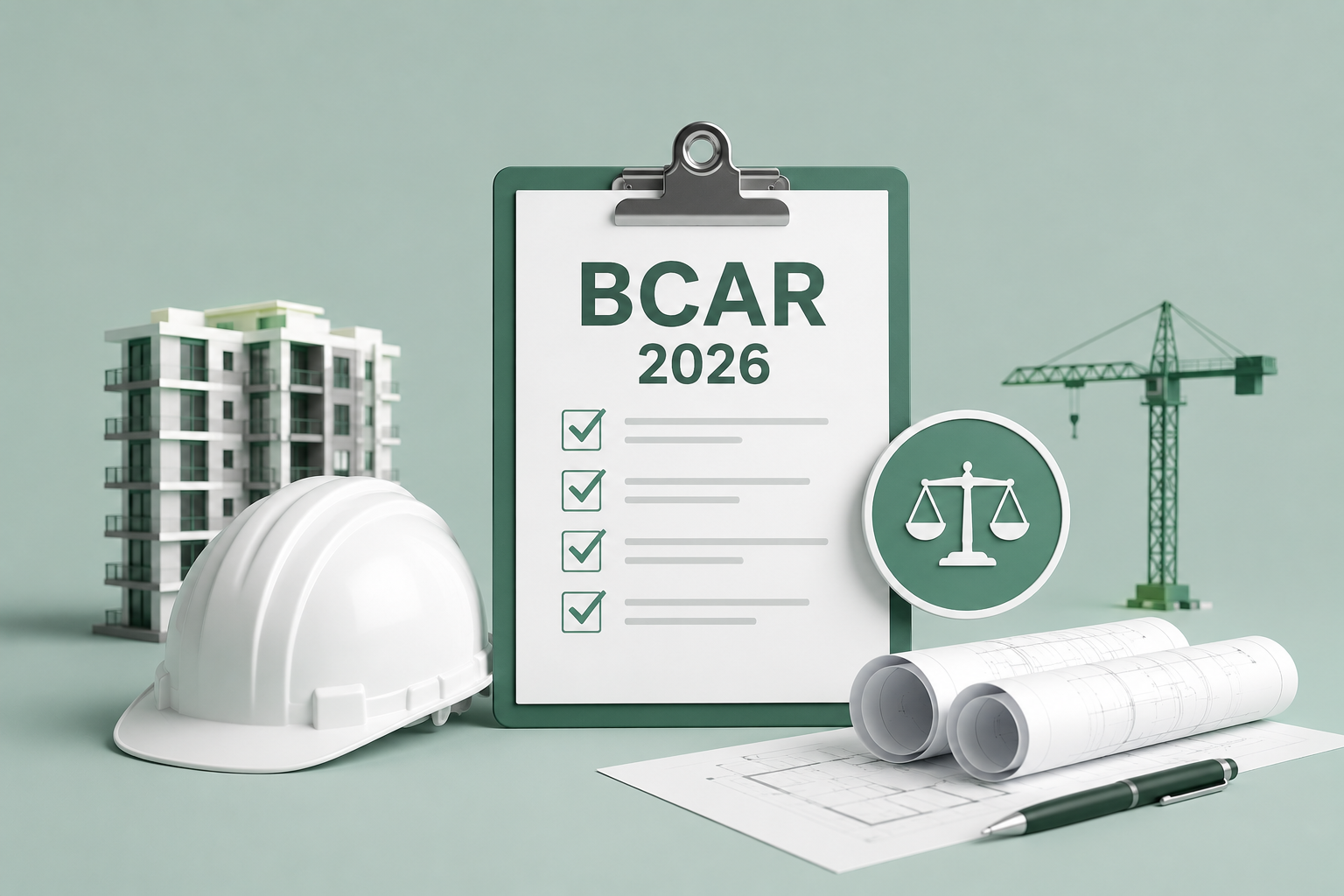
BCAR in 2026
The Key Issues Every Construction Professional Needs to Watch
.png)
.png)
The Building Control (Amendment) Regulations (BCAR) continue to be one of the most important compliance frameworks in the Irish construction industry. While the principles of BCAR remain well established, 2026 has brought renewed focus on compliance standards, certification responsibilities, inspection quality and the legal obligations of all parties involved in delivering construction projects.
As projects become increasingly complex and accountability continues to tighten, many of the challenges surrounding BCAR are no longer technical—they are procedural, contractual and risk-related. Understanding these issues is essential for anyone involved in design, construction, certification or project delivery.
Increased Focus on Compliance Following Recent Legislative Updates
Recent updates to the Building Control framework have reinforced the importance of demonstrating compliance throughout the entire project lifecycle—not simply at completion. Clients, builders, designers and certifiers are expected to maintain robust documentation, clearly defined responsibilities and effective communication from commencement through to handover.For many organisations, this means reviewing existing BCAR procedures to ensure they reflect current requirements and industry best practice.
Inspection Plans Are Receiving Increased Scrutiny
One of the most common weaknesses identified across projects is the quality of inspection planning.
Inspection plans should be project-specific, proportionate to the level of risk and supported by appropriate inspection records throughout construction. Generic inspection plans that fail to reflect the actual works being carried out can expose both organisations and certifiers to unnecessary risk.
Managing Ancillary Certificates
Ancillary Certificates continue to present challenges across the industry.
Delays in obtaining certificates, uncertainty regarding who should certify specialist works and disagreements over the wording or scope of certificates all impact project completion. Projects should also have contingency plans where an ancillary certifier withdraws or changes during construction.
When Certification Becomes Difficult
One of the biggest risks under BCAR occurs when work on site does not match the approved design or specified standards.
Assigned Certifiers and Design Certifiers cannot simply rely on assurances from others—they must be satisfied that sufficient evidence exists to support certification. Where defects, unauthorised changes or incomplete information are discovered late in a project, certification can become delayed or, in some cases, impossible until the issues have been resolved.
These situations frequently result in programme delays, increased costs and disputes between project stakeholders.
Keeping Up to Date Matters
BCAR is not simply an administrative process, it is a legal framework designed to demonstrate compliance with the Building Regulations.
Organisations that invest in BCAR training are better placed to reduce project risk, improve compliance, avoid costly disputes and deliver smoother project completions.
For professionals seeking a practical update on the latest developments, our BCAR & Building Control Regulations course on 8 September 2026, streamed live from CMG Studios, provides expert guidance on the recent 2026 legislative changes, inspection planning, certification, ancillary certificates, exemptions and the practical issues currently affecting projects across Ireland.